Composition · 8 min read
Golden Ratio vs Rule of Thirds in Photography
Compare two familiar composition guides and learn when grids, spirals, diagonals, and subject movement can strengthen a photograph.
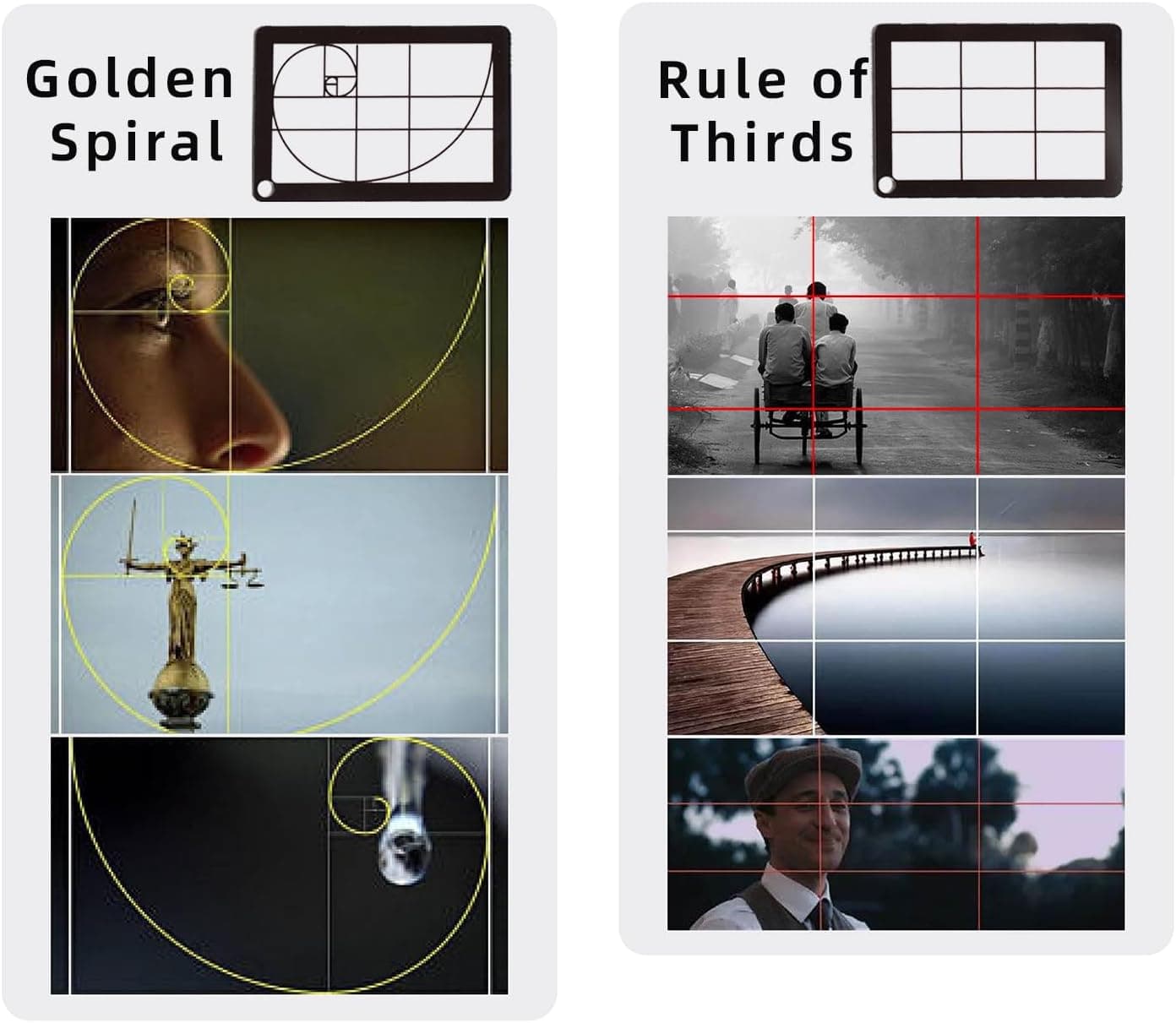
The rule of thirds and golden ratio are not laws that make an image successful. They are visual frameworks for organizing attention. Both divide the frame, but they create different rhythms: the rule of thirds is simple and direct, while golden-ratio grids and spirals can suggest a more gradual movement through the image.
How the rule of thirds works
Divide the frame into three equal sections horizontally and vertically. The four intersections become convenient positions for a subject, face, eye, or other point of emphasis. Horizons can sit on the upper or lower third rather than dividing the image exactly in half.
The rule is easy to see in many camera displays, quick to apply, and useful when the photographer must compose rapidly. It often creates clear asymmetry while leaving space for context or subject movement.
How golden-ratio guides differ
A golden-ratio grid places its divisions closer to the center than a thirds grid. A golden spiral curves inward toward a focal area, while golden triangles use diagonals to organize direction and visual weight. These guides can suit scenes that contain natural curves, layered paths, or a sequence of elements leading toward a subject.
The mathematical label is less important than the visual result. The guide is useful when it helps you see relationships between shapes, negative space, and movement. It should not force a subject into an awkward position simply to match an overlay.
Choose a guide based on the scene
- Use thirds for clear subject placement, horizons, and fast-moving situations
- Try a spiral when curves or layered elements lead toward a focal point
- Use golden triangles when strong diagonals dominate architecture or landscape
- Use a V-shaped guide when two directional lines converge on the subject
- Ignore every guide when symmetry, central framing, or deliberate tension better serves the image
Train your eye with overlays
- Choose one static scene with foreground, middle distance, and background elements.
- Hold or display a thirds guide over the scene and make one composition.
- Without moving far, repeat with a golden spiral or triangle guide.
- Photograph both versions, then remove the guide and make a third intuitive frame.
- Compare where your eye enters, pauses, and exits each photograph.
The exercise is not about deciding which template wins. It builds awareness of spacing and visual pathways. After enough practice, you will recognize these relationships without placing a guide over the scene.
Balance structure with subject meaning
Composition supports content. A portrait may benefit from open space in the direction of the subject's gaze, while a photograph about confinement may intentionally crowd the frame. A perfectly aligned spiral cannot compensate for unclear timing, light, gesture, or subject matter.
Use guides during planning and review, then ask a more important question: does the arrangement help the viewer understand what the photograph is about? When the answer is yes, the composition is doing useful work regardless of whether it follows a named ratio.
Frequently asked questions
Questions about this workflow
Is the golden ratio always better than the rule of thirds?
No. The rule of thirds is often faster and clearer, while golden-ratio guides may suit layered or curved movement. Choose the structure that supports the scene.
Should every subject sit on an intersection?
No. Central, symmetrical, edge-weighted, and intentionally unbalanced compositions can all be effective. Intersections are options, not requirements.
Can I crop an existing photo to these guides?
Yes, overlays can help evaluate cropping, but avoid removing meaningful context or reducing image quality merely to match a template.