Film Handling · 6 min read
How to Store Exposed 120 Film Without Light Leaks
Protect exposed 120 roll film from loosening, light leaks, moisture, and identification mistakes before development.
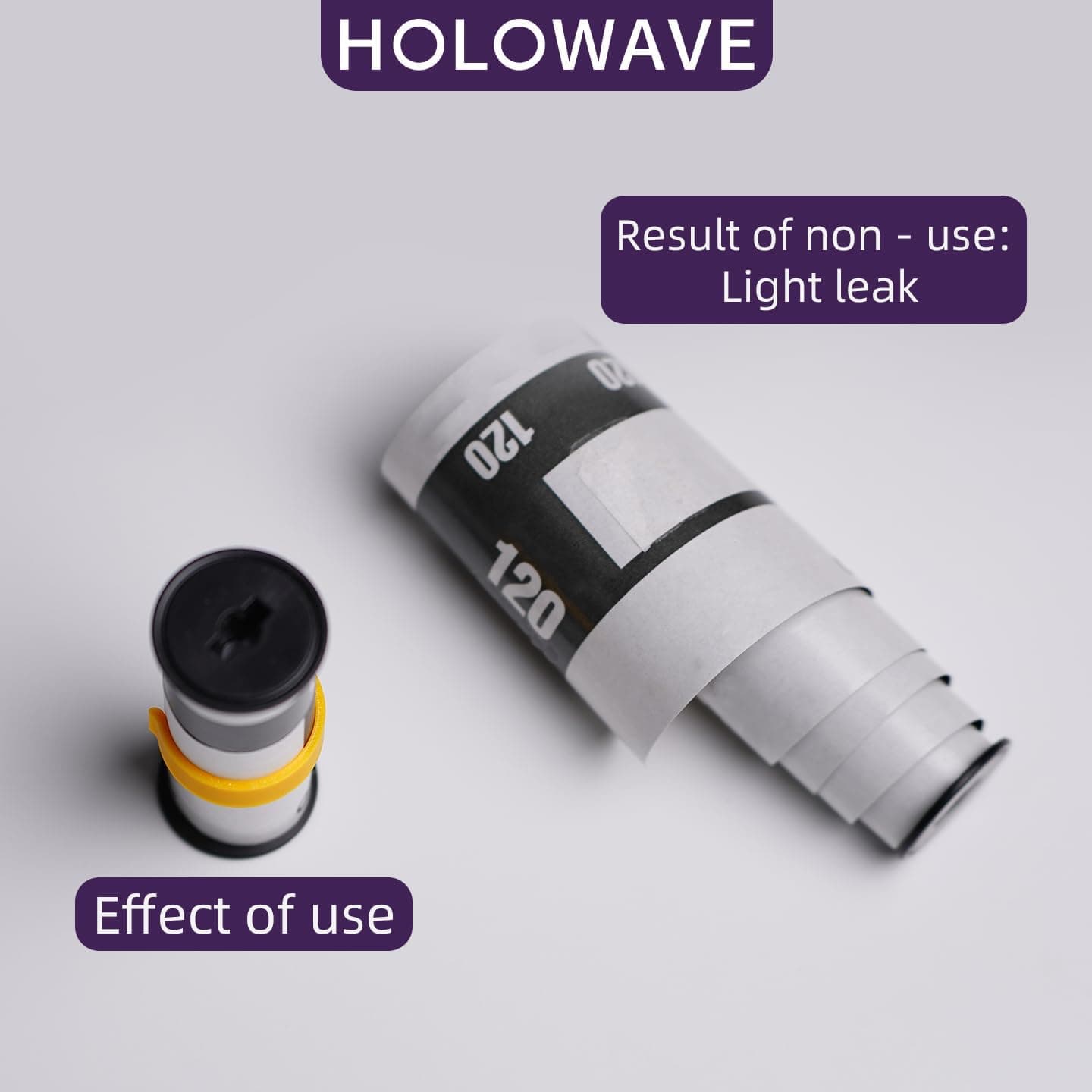
Unlike a 35mm cartridge, exposed 120 film depends on its backing paper and outer seal for protection. If the roll loosens after it leaves the camera, light can reach the edges and travel farther into the roll. Good storage therefore starts the moment the final frame is wound onto the take-up spool.
Wind the roll completely
After the last exposure, continue winding until the backing paper has fully wrapped around the film. Do not open the camera as soon as the frame counter ends. Most cameras provide enough additional winding to move the film safely under several layers of backing paper.
When opening the camera, work out of direct sunlight. Shade the camera with your body or move indoors if possible. Remove the roll by the spool ends and keep steady pressure on the backing paper so it cannot spring loose.
Seal and secure the backing paper
- Hold the finished roll firmly without squeezing the film edges.
- Use the adhesive end seal supplied with the film and press it onto a clean, dry backing-paper surface.
- Check that the paper remains tight and that neither flange has shifted away from the roll.
- Fit a reusable film ring or retaining band around the center of the roll for extra security during travel.
- Place the roll in a light-resistant pouch or original wrapper until development.
A retaining ring is backup protection, not a replacement for winding and sealing correctly. It helps prevent a finished roll from loosening in a bag and makes exposed rolls easier to identify at a glance.
Label every exposed roll
Record the film stock, exposure index, camera, date, and whether the roll needs special processing such as push or pull development. Write on a separate label or on an appropriate backing-paper area without pressing hard enough to mark the film underneath.
Use a simple visual system to distinguish exposed and unexposed film. For example, keep fresh rolls in their factory wrappers and place a colored ring only on exposed rolls. A consistent system prevents accidental double exposure and gives the lab the information it needs.
Protect rolls during travel
Airport scanner policies and equipment vary, so check current guidance before travel. The mechanical storage principle remains the same: keep each roll tight, dry, labeled, and protected from pressure.
- Keep exposed rolls in a rigid case so spool flanges cannot be crushed
- Avoid hot cars, direct sunlight, and damp camera bags
- Request hand inspection for high-speed film when airport scanning is a concern
- Carry film in clear, organized bags so inspection is quick
- Do not remove backing paper or transfer the film outside a darkroom or changing bag
Store before development
Develop exposed film as soon as practical. For short-term storage, use a cool, dry place with stable temperature. If refrigeration is necessary for a longer delay, seal the rolls in a moisture-resistant bag and let them return to room temperature before opening the bag. This reduces condensation on the film and backing paper.
If a roll has already become loose, do not try to rewind it in room light. Put it into an opaque container or changing bag and ask a lab to secure it in darkness. Early caution can save images that would otherwise be fogged.
Frequently asked questions
Questions about this workflow
Is the paper seal on 120 film enough?
It is the primary seal when correctly applied. A retaining ring or band adds useful protection against loosening during transport but does not replace the paper seal.
Can I tape a loose roll closed?
If the roll is still tight, a small piece of suitable tape can reinforce the backing paper. If it has unwound, move it into darkness instead of handling it in room light.
Should exposed 120 film be refrigerated?
For a short wait before development, a cool stable room is generally simpler. For longer storage, sealed refrigeration may help, but avoid condensation by warming the sealed film before opening it.